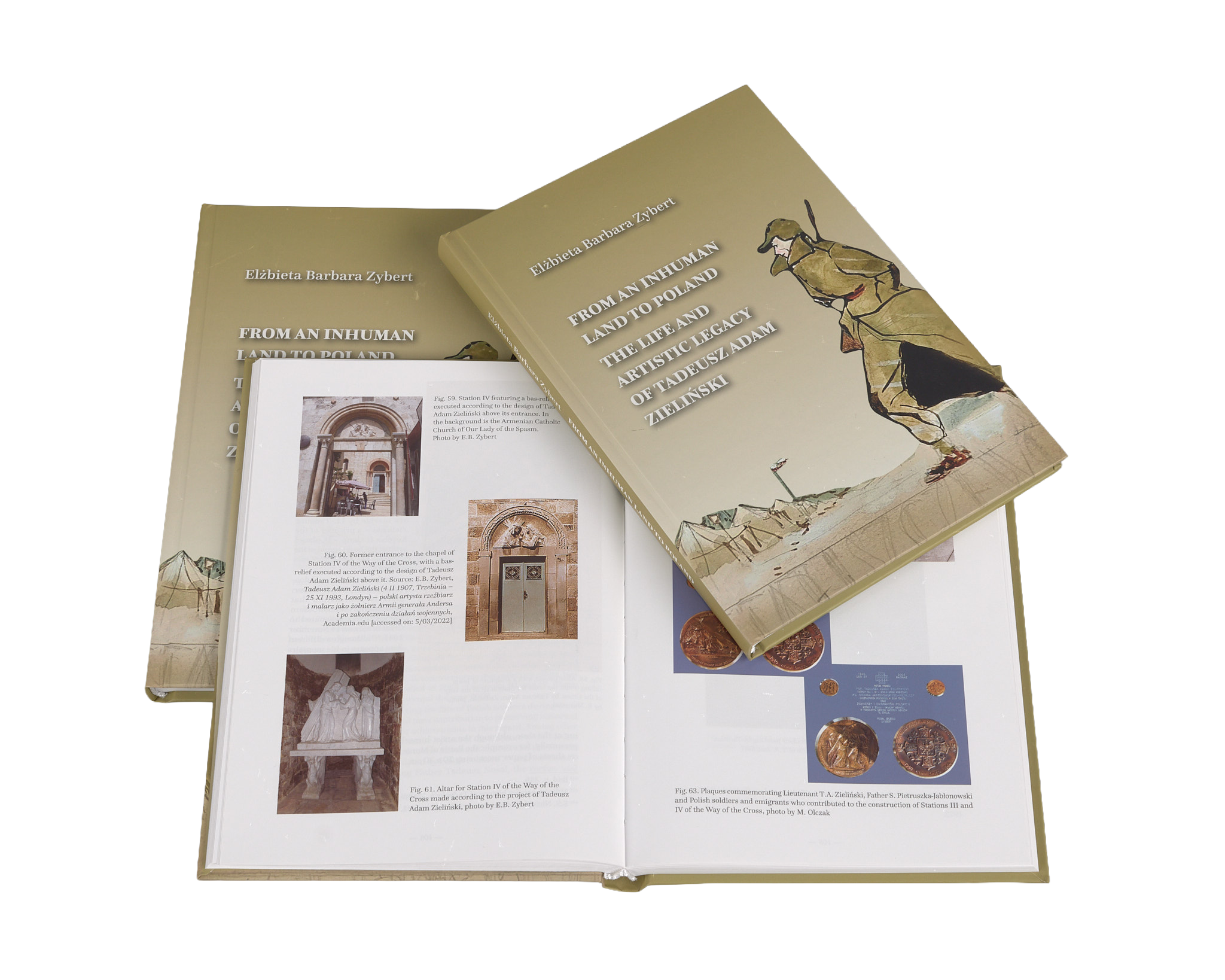
 In this book, From an Inhuman Land to Poland. The Life and Artistic Legacy of Tadeusz Adam Zieliński, Prof. Zybert offers readers a picture of the life and achievements of Lt. Tadeusz Adam Zieliński, a distinguished painter and sculptor who served in the 2nd Polish Corps. Before joining the Polish army, he was a prisoner in the Soviet Kozelsk II camp for Polish prisoners of war. In very difficult conditions that required courage and determination on his part, risking harsh punishment from the camp commanders if his work was discovered, he produced the bas-relief of Our Victorious Lady of Kozelsk. This bas-relief was given to Gen. Anders and accompanied the Polish armed forces throughout their wartime campaigns, before finding a home in the Polish Church of St. Andrew Bobola in London.
As he marched with the army, Zieliński produced other splendid sculptures in, for example, Tiberias or Jerusalem. After the war, he settled in Great Britain, and for political reasons never returned to Poland. He left behind in exile a major legacy of works of art, including many sculptures on a variety of themes, which have been shown in one-man or collective exhibitions, and are installed in churches (e.g. the Polish Church of St. Andrew Bobola in London) and other public buildings.
–––––––––––––––
Publikacja From an Inhuman Land to Poland. The Life and Artistic Work of Tadeusz Adam Zieliński przybliża życie i twórczość porucznika Tadeusza Adama Zielińskiego – wybitnego rzeźbiarza i malarza oraz żołnierza 2. Korpusu Polskiego. Książka ukazuje jego dramatyczne losy, od uwięzienia w sowieckim obozie w Kozielsku II, przez służbę wojskową, po działalność artystyczną realizowaną w niezwykle trudnych warunkach. Szczególne miejsce zajmuje historia powstania płaskorzeźby Matki Boskiej Zwycięskiej Kozielskiej, wykonanej potajemnie w obozie i ofiarowanej gen. Władysławowi Andersowi.
Autorka ukazuje również bogaty dorobek artystyczny Zielińskiego tworzony na szlaku bojowym i na emigracji – m.in. w Tyberiadzie, Jerozolimie oraz Wielkiej Brytanii, gdzie artysta osiadł po wojnie i pozostał do końca życia. Publikacja dokumentuje jego liczne realizacje rzeźbiarskie i malarskie, obecne w przestrzeni sakralnej i publicznej, a także udział w wystawach indywidualnych i zbiorowych. Książka stanowi ważny głos w badaniach nad sztuką polskiej emigracji oraz świadectwo losów artysty, którego twórczość i biografia nierozerwalnie splatają się z historią XX wieku.
Powiązane publikacje
Rocznik Muzeum Narodowego w Kielcach, tom 25

Syzyfowe prace