Henryk Sienkiewicz (1846–1916)
He is one of the most outstanding and, to this day, most popular Polish writers – a short-story writer, journalist, a social activist and a philanthropist. He was born into an impoverished landowning family in Wola Okrzejska, in the Podlasie region, on 5 May 1846. From 1855 on, he lived in Warsaw, where he attended secondary school and then studied – initially law and medicine, and later history and philology – at the Imperial University of Warsaw. 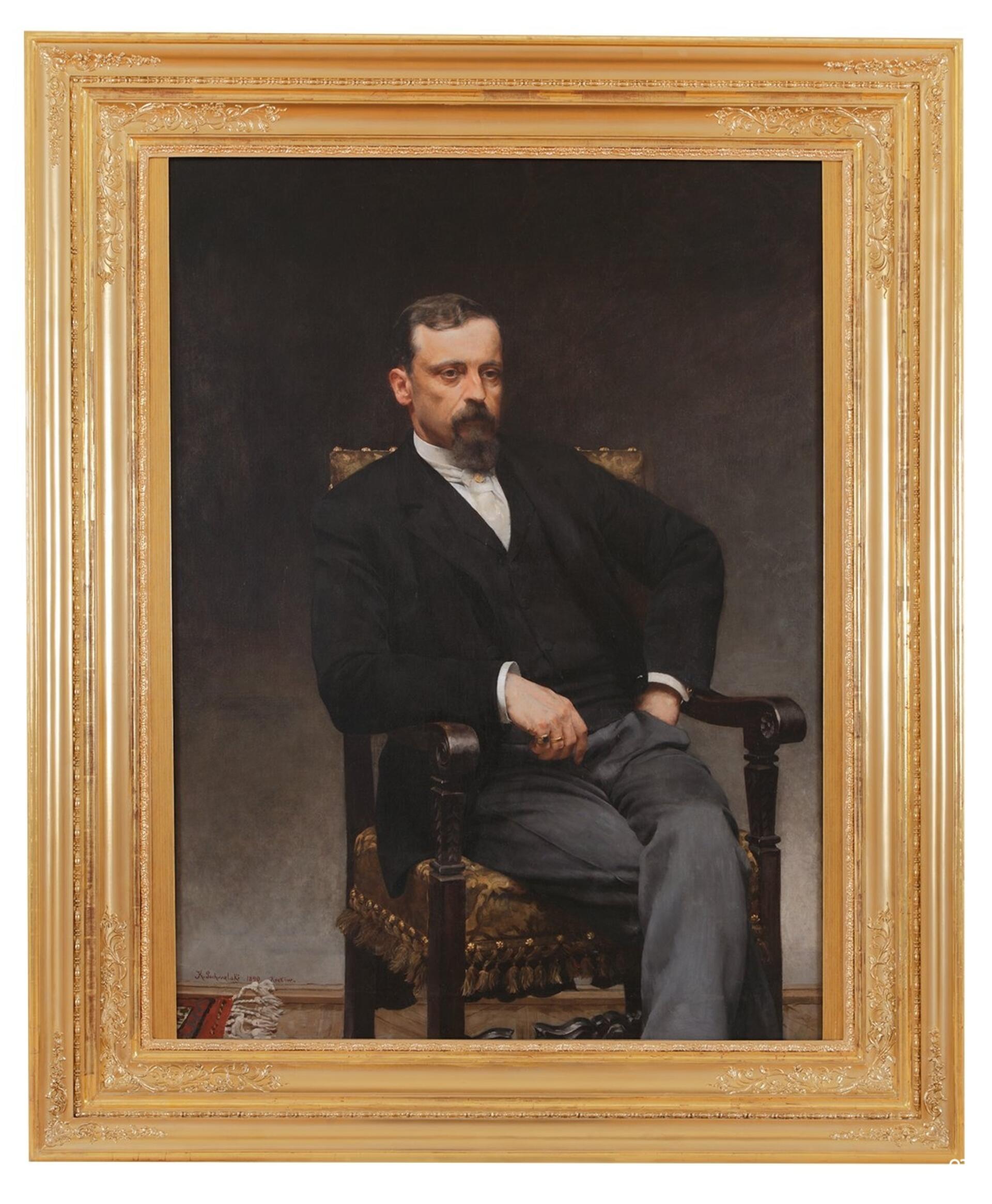
After graduating, he worked as a reporter, columnist and correspondent for the Warsaw press. Between 1876 and 1878, he lived in North America, from where he sent vivid reports that were published in Gazeta Polska. He also travelled extensively throughout Europe and Africa, and his experiences from these journeys were reflected in his literary works.
Short stories that tackle contemporary social and moral issues occupy a special place in Sienkiewicz’s literary output. He took up such topics as the plight of the rural poor in ‘Szkice węglem’ [‘Charcoal Sketches’], the fate of a gifted but wrong child in ‘Janko Muzykant’ [‘Janko the Musician’], the fortunes of emigrants and their longing for their homeland in ‘Za chlebem’ [‘For Bread’] and ‘Latarnik’ [‘The Lighthouse-Keeper from Aspenwall’] and the destruction of an Indian tribe in ‘Sachem’.
It was historical novels, in which he masterfully blended fiction with fact, that brought him the greatest fame. In the Trilogy series (With Fire and Sword, The Deluge, Colonel Wołodyjowski), he portrayed the history of the former Polish-Lithuanian Commonwealth as that of a strong state capable of revival – a theme of particular significance during the period of the Partitions. In The Teutonic Knights , he depicted medieval Poland during the wars with the Teutonic Order, and in Quo Vadis, he portrayed ancient Rome and the birth of Christianity, in which allusions to the situation of his enslaved homeland were perceived. For younger readers, he wrote the adventure novel In Desert and Wilderness, with the plot set in Africa in the times of the Mahdi Revolt.
In 1900, his creative work was celebrated with great fanfare; in recognition of his achievements, the society presented him with an estate in Oblęgorek near Kielce. Five years later, the writer was awarded the Nobel Prize in Literature for his entire body of work, which cemented his international fame.
Sienkiewicz was involved in community work. He co-organised the Mianowski Fund and the Warsaw Providence Fund for Writers and Journalists and supported the construction of a sanatorium for tuberculosis patients in Zakopane. During World War I, while staying in Vevey, Switzerland, he co-established the General Committee for Aid to War Victims in Poland with Ignacy Paderewski.
He passed away in Vevey on 15 November 1916.