Once known as Gloriosa Wislicensium urbs – the magnificent city of Wiślica – today it is a small town situated in the southern part of the Świętokrzyskie Province within the historic region of Kraków.
In the Middle Ages, Wiślica was one of the oldest tribal centres and an important ducal seat. The history of this town is linked to that of the dukes Henryk of Sandomierz and Casimir the Just, the kings Władysław Łokietek and Casimir the Great, as well as the Jagiellonian dynasty and Jan Długosz.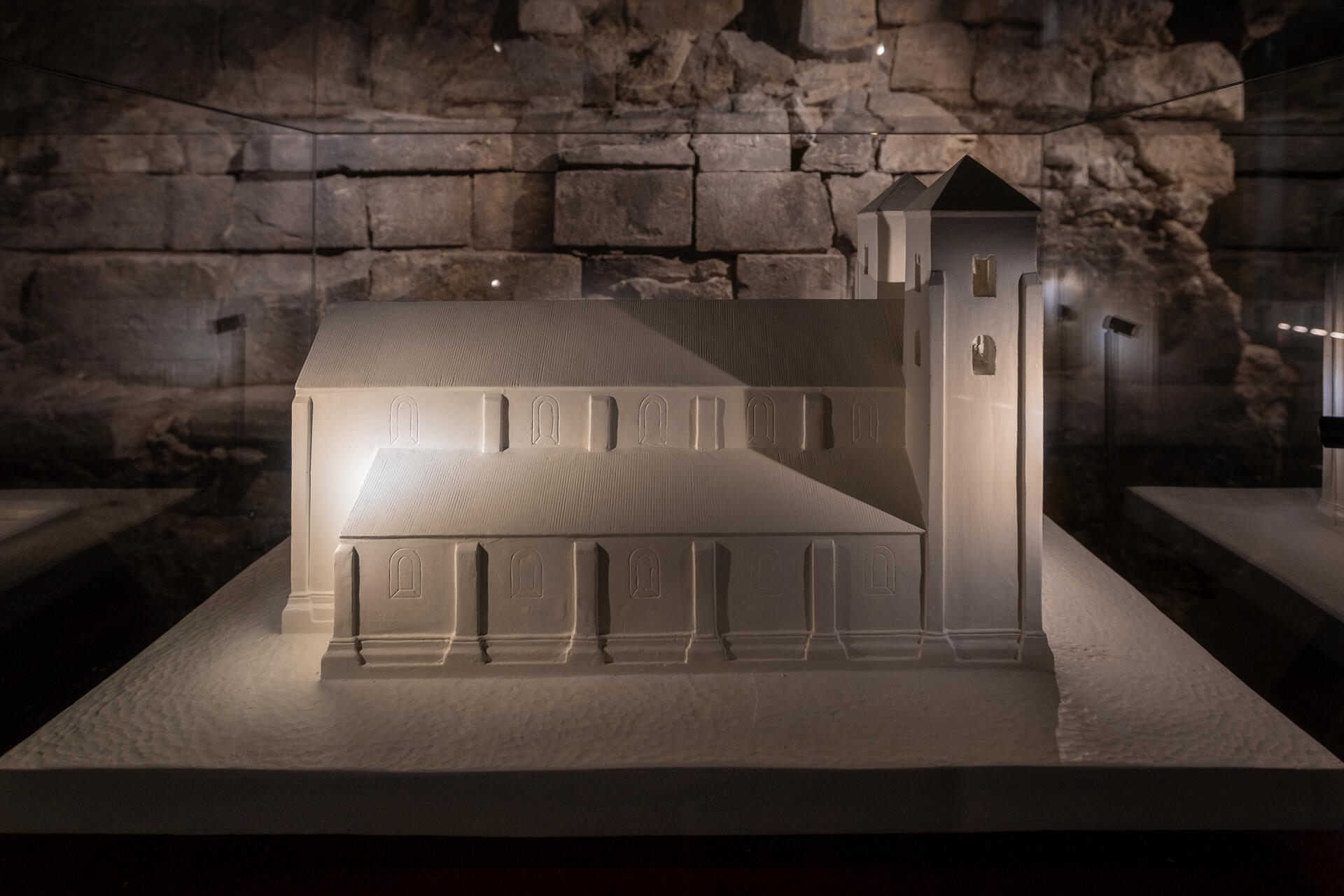
Wiślica originally covered only the area of a small gypsum outcrop overlooking the floodplains. This location provided an excellent strategic natural defensive position, making it easier to cross the marshy meadows. Towards the end of the 19th century, it was first identified by the Kraków historian Karol Potkański as the capital of the legendary Vistulan state, which bordered Great Moravia. Since then, the town has become the subject of great interest among historians, art historians and archaeologists. December 1958 proved to be a turning point. During work on the construction of a water supply system, a section of an ancient wall was uncovered in a trench on Batalionów Chłopskich Street. It turned out that these were the foundations of St Nicholas’s Church, which was probably built during the reign of the first Piasts in the 11th century. The name of the church would suggest the commercial character of both the church itself and the settlement situated on the route connecting Regensburg with Kievan Rus’ via Prague, Kraków and Sandomierz.
In the vast, marshy lands near the present-day village, an early medieval hillfort still stands, which can confidently be dated to the 10th–11th centuries, when it served a defensive function along a merchant route. It was located alongside what was perhaps the most mysterious residential complex in Wiślica. Długosz called it Regia – the royal seat. This complex consisted of two palaces (known as ‘palatia’) with adjacent rotundas.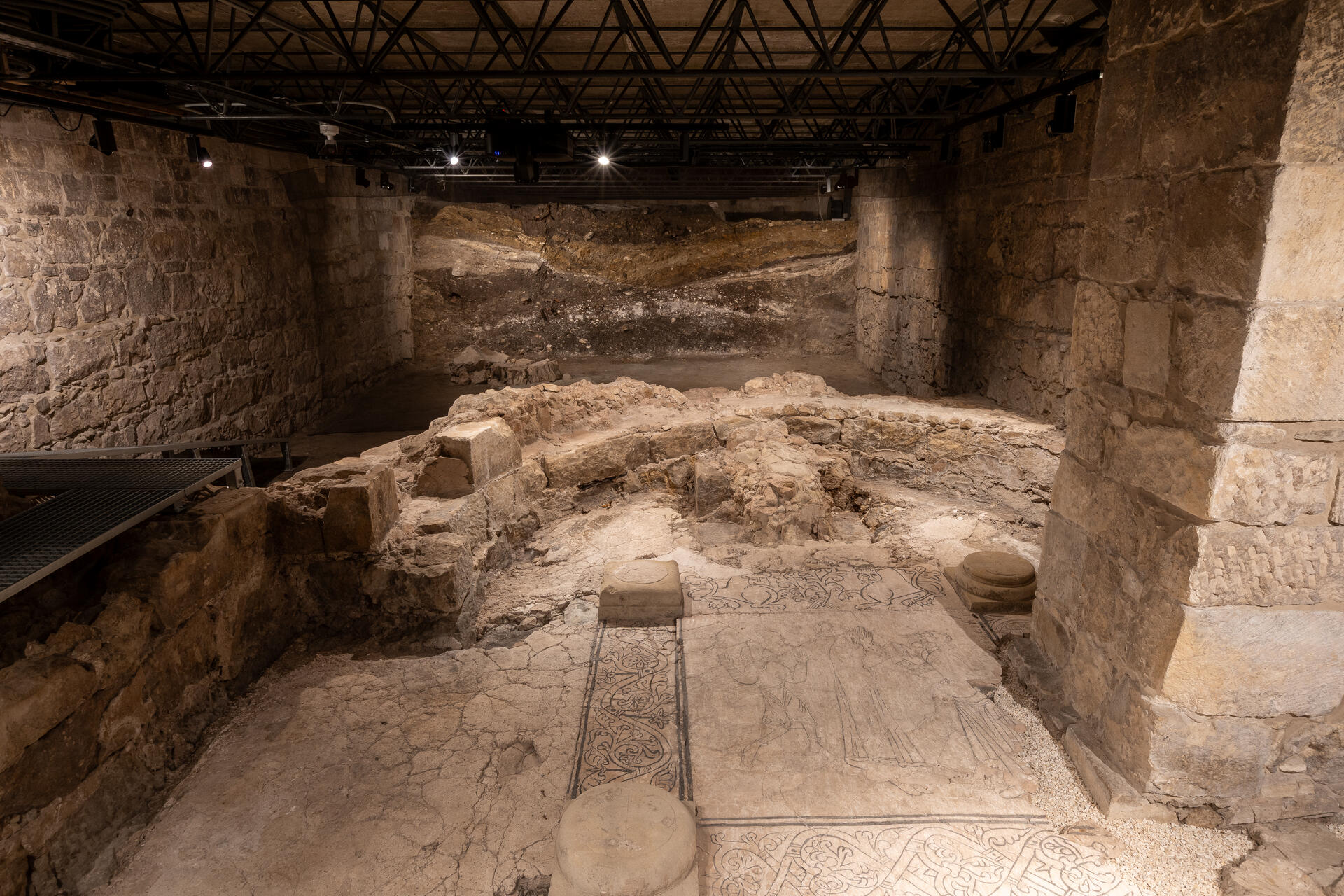
The first phase of the existence of the Wiślica stronghold came to a tragic end in 1135. The settlement was raided and plundered by the Rusyns, the Polovtsians and the Hungarians. However, Wiślica was quickly rebuilt.
During the period of regional fragmentation of Poland, Wiślica came under the rule of Henryk of Sandomierz and then, in 1166, passed into the hands of his brother, Casimir the Just. During his reign, the Duchy of Wiślica with the capital in Wiślica was established, which held the status of a separate territorial unit within the region of Małopolska. It probably still existed in 1234, as suggested by the reference to ‘dominium Visliciae et Sandomiriae’ in a charter issued by Bolesław the Chaste.
Wiślica’s golden age came to an end with the Tatar invasion in 1241. As a result of the attack, the town and its entire infrastructure were destroyed and burnt to the ground. After a brief hiatus, the town reappeared in the annals of history at the turn of the 14th century.
During the struggle to reunite the Kingdom of Poland, Wiślica supported Władysław Łokietek’s claim to the throne. In the late 13th century, the town began to play a significant role in Małopolska once again. The 14th century proved to be of immense importance for Wiślica – thanks to Władysław Łokietek, numerous assemblies attended by the highest-ranking dignitaries from Kraków and Sandomierz were held in the town, which testifies to the affection which the duke (who became king on 20 January 1320) held for Wiślica. It is likely that the settlement was granted town privileges in the first quarter of the 14th century, and after 1333 the town was founded under German (Magdeburg) law.
The period of Wiślica’s prosperity is associated with the reign of Casimir the Great, when the town again became one of the most important religious, administrative and judicial centres in Małopolska. This was also the seat of the vice-starost (podrzędztwo), or the administration of the royal estates. The importance of the town is evidenced, for example, by Casimir the Great’s frequent visits. The year 1347 is remembered as the year in which the first codification of law in Poland, known as the Wiślica Statutes, was adopted and promulgated. Thanks to the king, Wiślica was surrounded by a stone wall with three gates: the Kraków Gate, the Busko Gate and the Castle Gate. A church founded in 1350 was a particularly notable building, which towers above the modern surroundings to this day. It was also to the king’s credit that he granted Wiślica the privilege of operating a salt warehouse. These privileges are confirmed by subsequent documents issued by Casimir IV Jagiellon (1460) and Jan Olbracht (1493). The fortunes of the town were also of concern to Władysław Jagiełło, who exempted the townspeople from market duties and customs duties in 1386 and confirmed the charter granting the town its municipal rights in 1409. The Rus-Byzantine frescoes in the chancel of the minor basilica are a visible reminder of the ruler’s visits to Wiślica.
The 15th century was a significant period in the development of Wiślica. The town’s population grew very rapidly, partly because most of the knights’ gatherings took place here. The spatial layout of the town eventually took shape, too. Jan Długosz, a Polish historian and chronicler, was particularly fond of Wiślica. The custodian of the local collegiate church founded a house for the vicars and canons, which was built of stone and brick. The building survived the fire that occurred in 1471 without suffering any serious damage. Next to the vicarage, he also erected a majestic bell tower and a foundation plaque. The inability to expand Wiślica’s residential areas led to the rapid development of its suburbs – Gorysławice. A water supply system was established in Wiślica in 1528. Enjoying the favour of the rulers, the town grew in strength – a factor which contributed, among others, to an increase in the Jewish population, who had probably settled in the area in the 12th century.
This run of good fortune came to an end in 1564 when a huge fire ravaged the town. Plagued by a succession of disasters (fires, floods, epidemics), it was increasingly on the brink of collapse. Sigismund III Vasa’s attempts to revive the city ended in failure. The town fell in 1657 after the Swedish invasion. This was a critical moment for Wiślica, as the town never recovered from the flood. In 1766, King Stanisław August Poniatowski allowed the castle, its walls and gates to be demolished. The Partitions of Poland brought Wiślica’s development to a complete standstill. The wooden town hall was demolished in 1818, and the collegiate chapter was abolished in 1819, after more than 650 years. 1858 was the year in which another fire ravaged the town; in 1869, Wiślica lost its royal town charter.
The town had the misfortune of being situated in the area bordering Galicia. The Tsarist government did not build any roads here; it deliberately caused this part of Poland to fall far behind in terms of civilisational progress. In 1914, the Austrians shelled Russian positions in Wiślica. As a result, the collegiate church and the bell tower, the Długosz House and all the buildings in the village were seriously damaged. From 1919 onwards, under the direction of Adolf Szyszko-Bohusz, r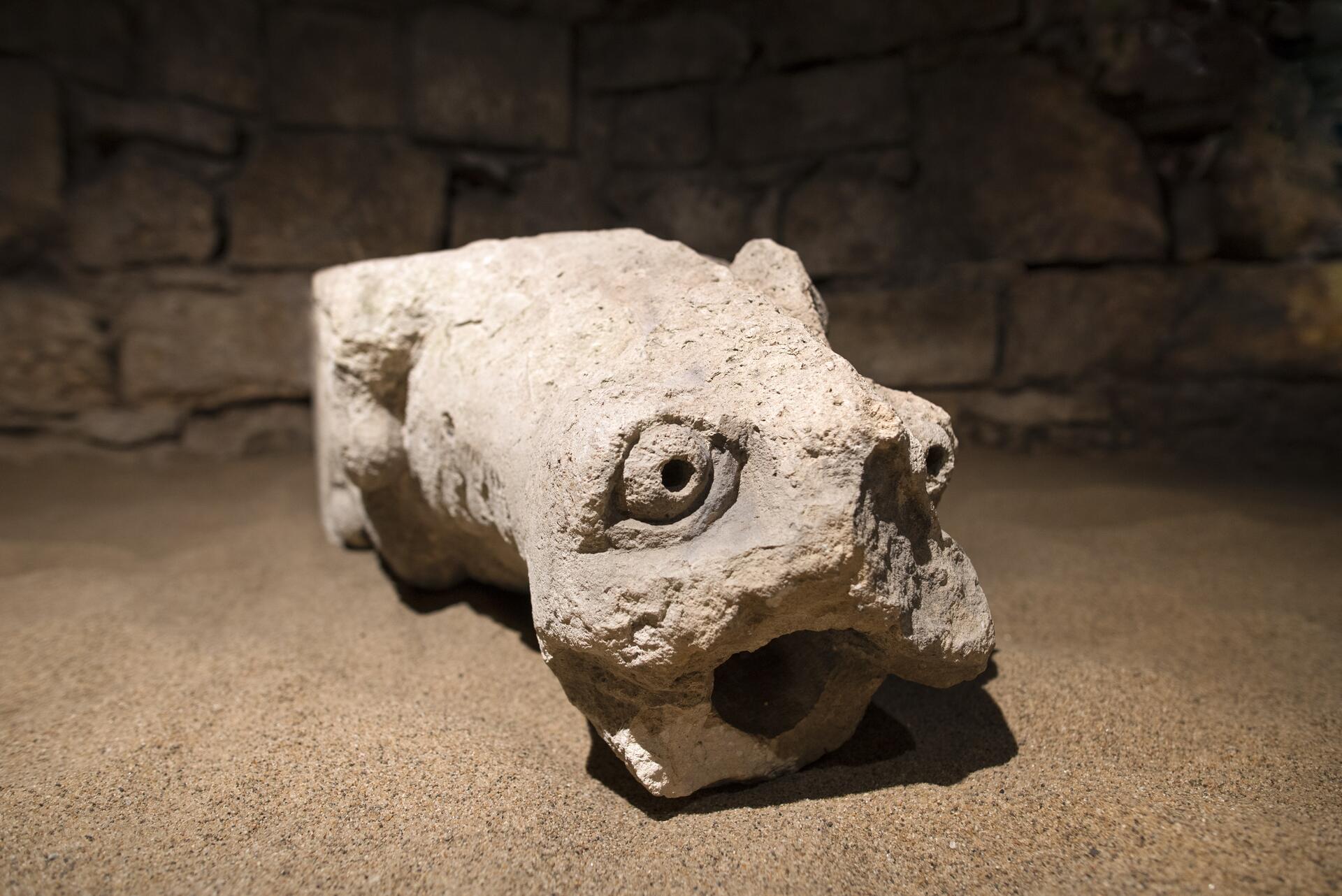 estoration work was carried out on the city’s most important historic buildings. This resulted in the reconstruction of the damaged sections of the church, which came at the cost of the demolition of two Romanesque towers. In 1929, Pope Pius XI re-founded the Wiślica chapter. The interwar period was a time of growth for the town, which was brought to a halt by World War II. The military operations spared the historic monuments, but led to the extermination of the town’s Jewish inhabitants. In 1949, archaeological excavations were launched by the Research Group on the Polish Middle Ages. Initially, the work focused on the hillfort, before extending to the medieval town area in subsequent years. The research has yielded excellent results, rediscovering the forgotten splendour of Wiślica. The town first appeared in written sources in the New Świętokrzyskie Chronicle in an entry dated 1079. Wiślica’s heritage makes it one of Poland’s most important historical and archaeological sites, placing it on a par with Kraków, Poznań and Gniezno.